Recycling and Sustainability at Tree Surgeons Woolwich
 At Tree Surgeons Woolwich, sustainability is built into the way we work every day. From careful site planning to responsible green waste handling, our aim is to reduce environmental impact while keeping local landscapes healthy and safe. We recognise that arboricultural work produces a wide range of reusable materials, so we treat recycling as a core part of our service rather than an afterthought. Our tree surgery recycling approach focuses on sorting, reusing, and diverting as much material as possible away from landfill.
One of our key goals is to achieve a minimum 95% recycling and recovery rate for suitable green waste and associated materials. That target includes woodchip, timber, branches, logs, leaf mulch, and selected non-organic items that can be separated for recovery streams. In practice, this means we aim to keep very little from each job in the residual waste bin. Where possible, we send material for mulching, biomass use, composting, and specialist recycling, helping to support a more circular approach to local tree care.
We also tailor our recycling activity to the way waste is handled across south-east London. Different boroughs have varying approaches to sorting green waste, timber, soils, and mixed construction debris, so we work with transfer processes that reflect local separation standards. By keeping timber clean and uncontaminated, and by isolating recyclable green arisings from general rubbish, our Woolwich tree surgeons team helps improve the quality of recycled output and reduce unnecessary disposal.
 Our operations rely on a network of local transfer stations and recovery facilities that are chosen for their ability to process arboricultural waste efficiently. These sites play an important role in ensuring that branches, trunk sections, and chippings are directed to the right destination. For example, timber may be redirected toward biomass or processing facilities, while organic material can be turned into soil improver or compost feedstock. Using nearby transfer stations also helps cut haulage distances, which in turn lowers emissions from transport.
We are careful to separate recyclable materials on site before they leave the job location. This can include sorting clean wood from mixed waste, removing metal fixings, and keeping contaminated materials apart from reusable green waste. Such attention to detail improves the chance that more material can be recycled rather than rejected. In an area like Woolwich, where borough waste policies increasingly favour separation at source, that extra effort supports wider sustainability objectives and aligns with local environmental expectations.
Our recycling practices are especially relevant for pruning, dismantling, and tree removal projects, where varied waste streams are created in a single day. By processing these different materials separately, our tree surgery Woolwich work can support more effective reuse. Logs may be retained for local habitat piles or firewood where suitable, branches can become woodchip, and fine green waste can be composted. This reduces the volume of waste sent to disposal and helps make each project more resource-conscious.
 Partnerships with charities are another important part of our sustainability strategy. When suitable timber, logs, or wood offcuts are available, we look to support local charitable groups, community gardens, conservation projects, and educational initiatives. These partnerships can help provide usable wood for habitat structures, path edging, play spaces, raised beds, or mulch applications. Working with charities means that material from Woolwich tree surgery jobs can continue to serve a useful purpose long after it has left the site.
We are especially interested in reuse options that benefit local communities and green spaces. For example, larger wood pieces can be repurposed for low-impact landscaping, while woodchip can help suppress weeds and retain moisture around planted areas. Where appropriate, this material can assist charities and volunteer-led projects that are working to improve urban biodiversity. It is a practical way to extend the life of otherwise discarded tree arisings while supporting social value alongside environmental benefit.
Our wider sustainability commitment also includes the use of low-carbon vans in our fleet. These vehicles are selected to reduce fuel use and emissions, particularly on short urban journeys where efficiency matters most. By investing in lower-emission transport, we are able to reduce the carbon footprint of our tree surgery operations across Woolwich and neighbouring districts. This is an important step in making day-to-day tree care more climate-conscious without compromising reliability or service quality.
 Fleet planning is combined with smarter routing to avoid unnecessary mileage and idle time. Whenever possible, jobs are grouped geographically so our vans travel fewer miles between sites and disposal points. This works hand in hand with our recycling programme, because better route planning can reduce the environmental cost of moving green waste to transfer stations or recovery facilities. In a busy urban setting, these efficiencies help us deliver eco-friendly tree surgery with a much smaller footprint.
We also review how materials are loaded and transported so that each trip is as efficient as possible. Clean separation at source means recyclable wood, green waste, and non-recoverable debris can be handled with fewer repeated journeys. This is particularly useful where borough systems encourage residents and businesses to separate organic waste from general rubbish, reinforcing the same principle in professional arboriculture. The result is a cleaner workflow, better resource recovery, and a more sustainable service overall.
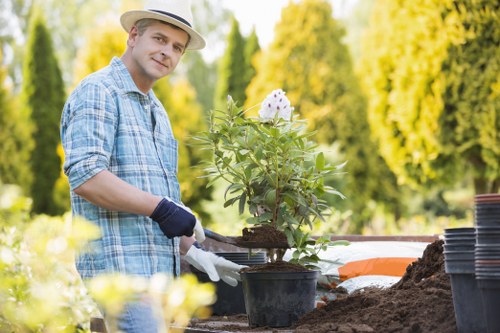 At Tree Surgeons Woolwich, sustainability is not a single policy; it is a set of daily habits that guide how we collect, sort, transport, and repurpose tree waste. From our tree surgeons Woolwich team’s commitment to high recycling rates, to our partnerships with charities and the use of low-carbon vans, every part of the process is designed to reduce waste and emissions. We are proud to support a greener local environment through practical actions that make a measurable difference.
By combining responsible waste separation, use of local transfer stations, and reuse opportunities for suitable timber and chippings, we help ensure that tree work contributes positively to the circular economy. Whether we are pruning street trees, dismantling storm-damaged limbs, or clearing overgrown sites, our approach remains the same: recover more, waste less, and work in a way that respects Woolwich’s environment and the wider boroughs it sits within.